|
GENERAL DESCRIPTION
|
|
|
|
|
| |
The NX1 series is a 32-bit MCU based high-quality speech/MIDI processor, which is specially designed for customers to innovate with advanced DSP power. It is embedded with OTP (One Time PROM) for mass production, such that no mask is required while MOQ / Lead Time are kept minimized.
With Instruction / Data Local Memory bus (ILM/DLM) built in CPU, the NX1 can run 1.57 DMIPS per MHz and up to 50+ DMIPS @ 32MHz. In addition, the dual clock design let customers switch between fast / slow clocks for achieving the best power consumption and performance ratio, or may employ 32.768KHz X’tal oscillator for time-keeping applications.
The NX1 series consists of several derivatives with respect to ROM (OTP), RAM, I/O and functions. With memory-mapped architecture, the NX1 can address up to 16MB space that includes memory, register files, peripheral and SPI flash storage (including instruction / data modes). SBC (Sub-Band Coding) is achieved with greatly enhanced quality & much less memory size compared against traditional ADPCM coding due to the incorporation of efficient DSP algorithms as well as the upgrade of H/W spec. Via the high performance of 32-bit MCU, the S/W-based MIDI synthesizer can reach more than 16-ch polyphonic channels. All data including SBC / MIDI files, wavetable timbres, XIP codes and general user data, can be accessed from the external SPI flash.
There are various useful features inside the NX1 series: Three sets of 16-bit Timers; 8-ch H/W PWM-IO pins, which provide complimentary outputs (with dead zone generator) and capture feature; 8-channel, 12-bit SAR ADC with MIC pre-amplifier & AGC / PGA that supports differential MIC input; 14-bit DAC + 1.5-watt Push-Pull power amplifier to drive speaker directly; independently configurable GPIO per pin with alternate functions; IR TX that supports 38KHz / 57KHz / 125KHz / 500KHz carrier for Infrared or QFID applications; SPI0 for SPI flash control, powered by embedded optional 3.3V / 1.8V LDO, which supports single/dual/quad I/O mode with XIP (eXecute In Place) capability; SPI1 for 2.4GHz RF module or other SPI devices; SDHC 2.0-compliant memory card; I2C H/W interface and UART TX / RX for serial communication.
Except developing by C language at NYIDE environment, which provides customers with more controllability over complicated projects. Moreover, The NX1 series brings Q-Code (High-level programming) to 32-bit MCU, which provides customers with an easy-to-use, highly productive development environment to cope with the importance of in-time product concept realization. The multi-purpose NX_Programmer (USB-2-Serial adaptor) H/W provides customers with various functionalities: program code debugging @ ICE, prototype demo @ FDB (Flash Demo Board) and mass production @ OTP. Besides, NX_Programmer can also provide ICP (In-Circuit Programming) function to program SPI flash for customers to fabricate PCBA in advance.
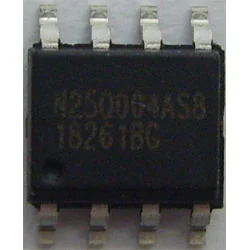
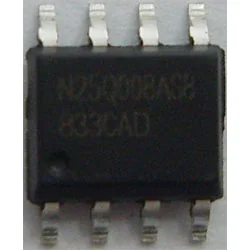
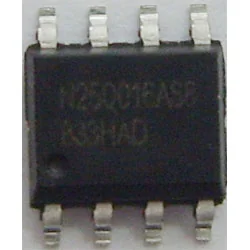
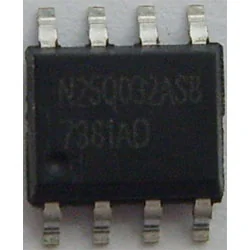
Various package forms are available for the NX1 series: Dice, SOP-16, SSOP-24, LQFP-32, LQFP-48, LQFP64 and the innovative SOP-8 / SOP-16 MCP (Multi-Chip Package), where SPI flash is stacked inside for applications that require small footprints. |
|
|
Features
|
|
|
|
|
|
- Wide Operating Voltage: 2.4V ~ 5.5V
- SPI flash @ SPI0 powered by embedded LDO, 3.3V (default) / 1.8V (not for NX11P21A, NX11M) optional.
- Min. operating voltage is 3.0V @ 32MHz maximum CPU clock, and 2.2V @ 12MHz minimum CPU clock.
- 32-bit CPU core
- Andes N705-S, like ARM Cortex-M0+.
- Max. CPU clock: 32MHz, up to 50+ DMIPS cooperated with zero wait-state high speed OTP.
- 1-cycle fast multiplier.
- Dual Clock Operation. Built-in oscillators for HI_CLK (32MHz) and LO_CLK (32.768KHz), accuracy trimmed to +/-0.5% for HI_CLK and +/-1.5% for LO_CLK.
- Power management to support 4 operating modes: Normal / Slow / Standby / Halt mode. At Halt mode, the consumption current is less than 1uA.
- LVD (Low Voltage Detection): Total 6-level options: 3.6V, 3.4V, 3.2V, 2.6V, 2.4V, 2.2V.
- LVR (Low Voltage Reset): User-configurable, default values are 2.8V @ 32MHz for NX12, 2.7V @ 32MHz for NX11, 2.4V @ 24MHz, 2.0V @ 16MHz, 1.8V @ 12MHz.
- Timers (Timer0 / Timer1 / Timer2): Each Timer consists of divider and 16-bit down-counter with various clock sources.
- Two PWM Generators (PWMA / PWMB)
- Each generator consists of a clock divider, a 16-bit timer (that can be used as a general timer) and four 16-bit duty cycle registers.
- Up to 4 independent PWM channels per generator (PWMA0 ~ PWMA3 / PWMB0 ~ PWMB3).
- Provide complementary outputs @ PWMA0 / PWMA1 & PWMB0 / PWMB1, with dead-zone generator.
- Capture supported @ PWMA.
- ADC (Analog Digital Conversion)
- 8-ch (with auto scan mode), 12-bit resolution SAR (Successive Approximate Register) ADC.
- Trigger by underflow of Timer0 /1 /2, or software manually.
- Built-in MIC bias, 2-stage of pre-amplifiers and AGC/PGA for gain control.
- Built-in 14-bit DAC + 1.3-Watt / 1.5-Watt (for NX11P22A / NX12P44A only) Push-Pull power amplifier
- Stereo DAC output (only for NX12P46 / NX12P88).
- Line-In to mix with internal analog output @ power amplifier to drive speaker.
- Up to 40 pins GPIO. Bit configurability for every I/O pin by register control, except pull-up value by byte. There are 8 pins (PA8 ~ PA15) supported with CSC (Constant Sink Current) capability (not for NX11P21A / NX11M).
- Two SPI masters supported
- Up to 32MHz clock speed.
- 32-bit mode supported to address more than 128Mb SPI flash.
- Support Data mode and XIP mode (eXecute In Place, for SPI0 only).
- Support Single / Dual / Quad I/O mode of SPI flash (for SPI0 only).
- IR TX, UART, I2C, SDHC 2.0 supported.
- RTC with 16KHz (or 4KHz) / 1KHz / 64Hz / 2Hz interrupts.
- WDT (Watch-Dog Timer) supported with optional 188ms / 750ms Reset.
- MCP (Multi-Chip Package) for NX11M2xA series
- SPI Flash stacked inside low-cost SOP-8 / SOP-16 packages
- Support 4Mb / 8Mb / 16Mb / 32Mb SPI Flash density
- SPI0 interface bonded inside the package, leaving more GPIO pins available
- Built-in Push-Pull PA to drive speaker directly
- Max. GPIO pins: 4 @ SOP-8, 12 @ SOP-16
- Master or Slave operation
- Support OTP Security Lock to prevent OTP data from being read.
- Easy-to-use Development Environment
- High-level Q-Code programming.
- NYIDE for advanced programming with C language.
- Multi-purpose NX_ProgrammerTM with FDB, OTP & ICE.
- Q-FDB_Writer & OTP_Writer also support NX1 series.
- S/W-based Speech/MIDI Codec & various algorithms
- ADPCM Codec (Adaptive Differential PCM): 4-bit / 5-bit per sample.
- SBC Codec (Sub-Band Coding): 7.2K ~ 32Kbps with maximum 16KHz bandwidth.
- CELP Decoder (Code-Excitation Linear Prediction): 4.8Kbps @ 8KHz SR for human voice only.
- MIDI: Up to 16-channel MIDI @ 32KHz Output Sample Rate.
- Voice Recognition, Voice Changer, Ultrasound communication, etc.
- Noise filter @ 4x Up-Sampling.
|
|
|
|
|
|